Introduction
In the era of Industry 4.0, asset integrity management emerges as an essential strategy for optimizing industrial operations. Increasing asset reliability, reducing the risk of accidents, improving personal safety, and lowering maintenance costs are among its main objectives. However, success depends on a factor that is often overlooked: data — and, more specifically, its effective integration.
Challenges in Data Collection
The data collected during inspections underpins asset management, making it possible to predict failures and optimize maintenance. However, three main challenges need to be overcome:
- Data Quality — Inaccurate and incomplete information leads to mistaken diagnoses.
- Data Volume — A low volume of data reduces the reliability of analyses.
- Data Integration — Data scattered across different systems makes it impossible to get a full view of asset condition.
Benefits of Data Integration
Effective integration makes it possible to:
- Run deeper analyses that reveal patterns that would otherwise stay invisible.
- Make informed decisions based on concrete data.
- Produce accurate predictions that reduce unplanned shutdowns.
The Solution: STRIM
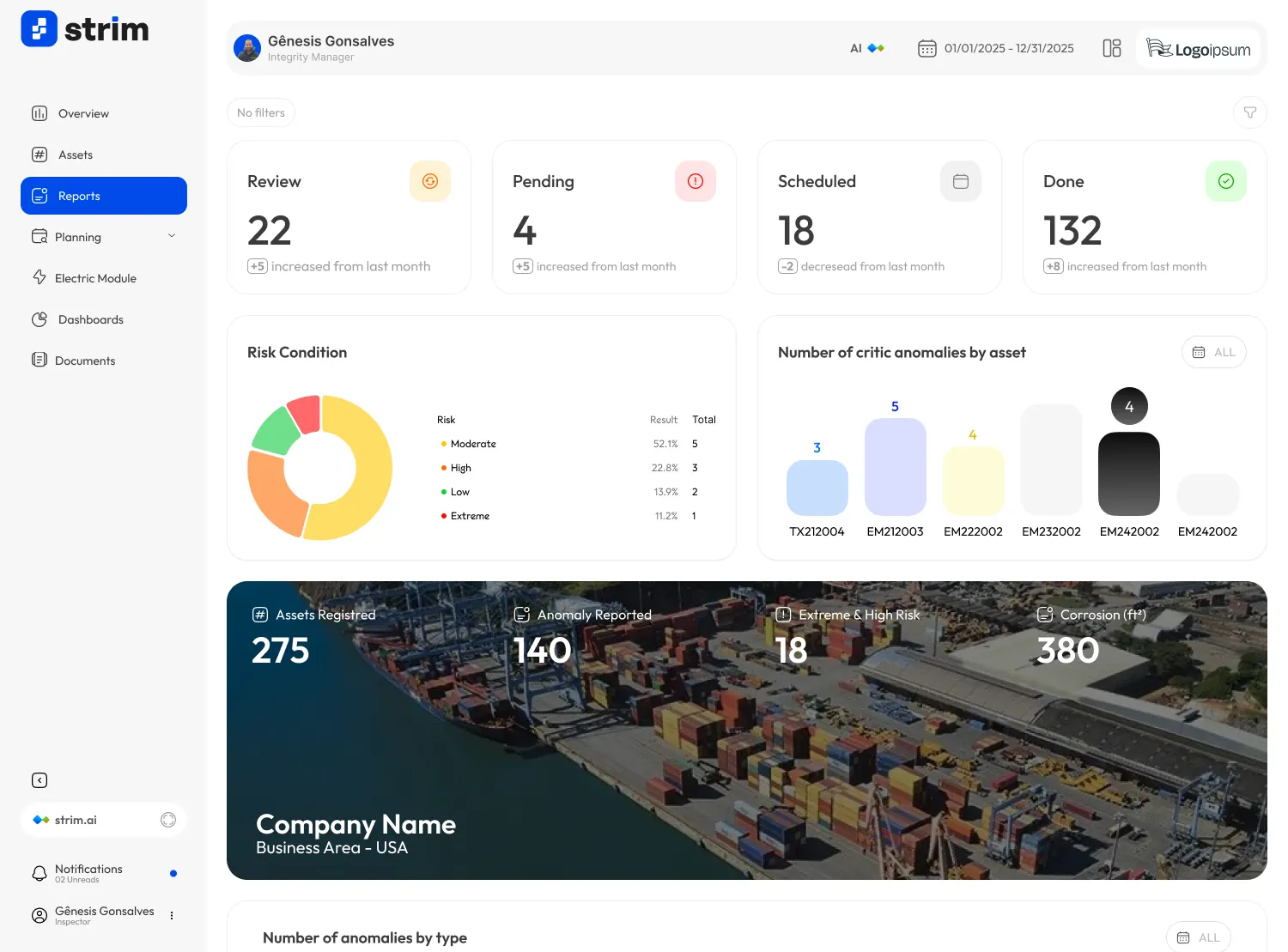
STRIM, built for Industry 4.0, simplifies asset management by letting inspectors record data directly in the field, eliminating paper-based notes. The synchronized data feeds custom dashboards and advanced analytics that support faster, better-informed decisions.