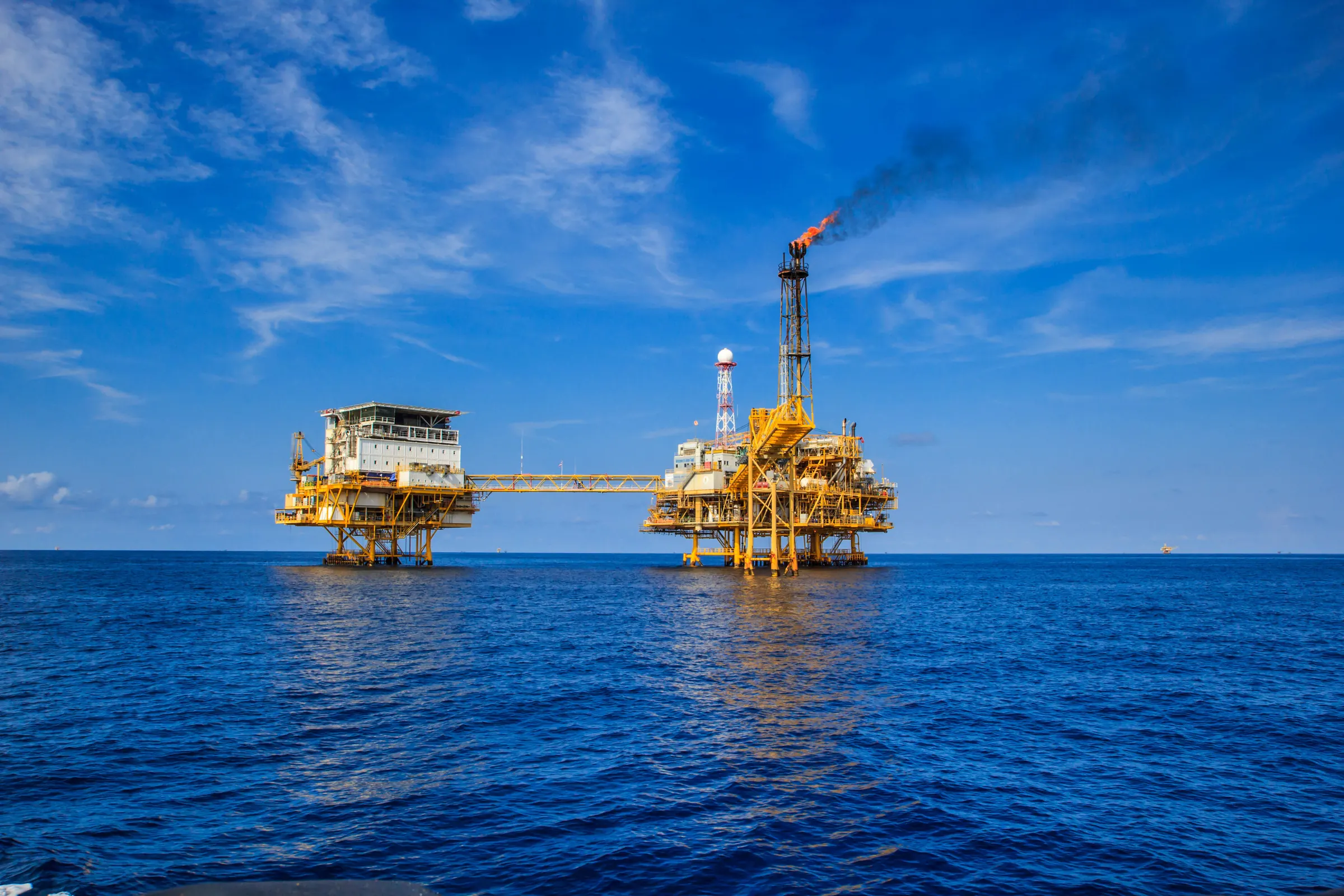
One of the greatest operational challenges in the offshore oil and gas sector is corrosion, a process that occurs naturally in metallic materials due to their interaction with the environment.
Corrosive processes are particularly intense in this sector due to continuous exposure to the marine environment, which presents adverse conditions such as high humidity, elevated salinity levels, and wide temperature variations — factors that accelerate the degradation of metallic materials.
Impacts of Corrosion on the Sector
In a sector of enormous importance to the economy, corrosion can represent a major threat. By accelerating material degradation, corrosion reduces the service life of platforms, pipelines, and other assets involved in offshore operations. This results in higher maintenance and repair costs, often requiring unplanned shutdowns that lead to productivity losses and operational delays.
Advanced stages of corrosion compromise the structural integrity of assets, and can lead to damage and failures that trigger serious accidents, such as collapses and leaks. These accidents jeopardize the safety of operations and personnel, while also creating a risk of pollution and damage to the marine environment — leading to non-compliance with standards such as ANP (Brazil's National Petroleum Agency) regulations and international environmental safety standards, resulting in significant legal and financial consequences for the companies involved.
Essential Standards for Corrosion Control and Integrity Management
Compliance with technical standards is an essential pillar for safe and efficient operations in the offshore sector. Below are some of the key standards that guide integrity management and corrosion control, ranging from material selection to structural asset assessment:
- NACE MR0175 / ISO 15156 — Establishes criteria for the selection and qualification of carbon steels, corrosion-resistant alloys, and other alloys used in H2S-containing environments. Essential for ensuring that materials used in oil and natural gas production equipment, as well as in gas treatment plants, are suitable for operating under corrosive conditions without compromising operational safety or asset integrity.
- NACE SP0100 — Provides guidelines for controlling external corrosion in prestressed concrete pipe and mortar-coated steel pipe used in water and sewer services, through cathodic protection. Its guidance ensures the durability of structures, regardless of supplemental coating.
- API 580/581 — These recommended practices provide guidance for developing Risk-Based Inspection (RBI) programs, focusing on the systematic assessment of failure probability and associated consequences. These standards optimize resources based on identified risks.
- API 571 — Covers the main damage mechanisms affecting equipment in the petrochemical industry, with an emphasis on corrosion and other degradation processes. It supports the development of effective inspection strategies and incorporates lessons learned from major industrial incidents.
- API 579-1 / ASME FFS-1 — The primary reference for Fitness-For-Service assessments, detailing procedures for evaluating the integrity of damaged equipment, such as pressure vessels and tanks. It provides guidance on projecting remaining service life and safe operating margins.
Asset Integrity Management as a Key Factor
Asset Integrity Management (AIM) consists of a range of strategies, methodologies, and technologies aimed at ensuring that assets perform their functions efficiently and safely throughout their life cycle. In the offshore sector, where operating conditions are particularly demanding, AIM takes on an even more strategic and indispensable role, involving:
- Risk Management — Identifying the areas and assets most susceptible to corrosion, and implementing measures to optimize resources and minimize the risk of structural failures and leaks.
- Inspections — Carrying out periodic inspections to identify early signs of corrosion, enabling rapid intervention before the problem worsens.
- Maintenance and Repairs — Applying protective coatings, surface treatments, and carrying out repairs to control and mitigate corrosion damage, extending the service life of assets.
- Data Analysis and Recording — Collecting data on the environment and asset condition to monitor the progress of corrosion, adjusting maintenance strategies as needed.
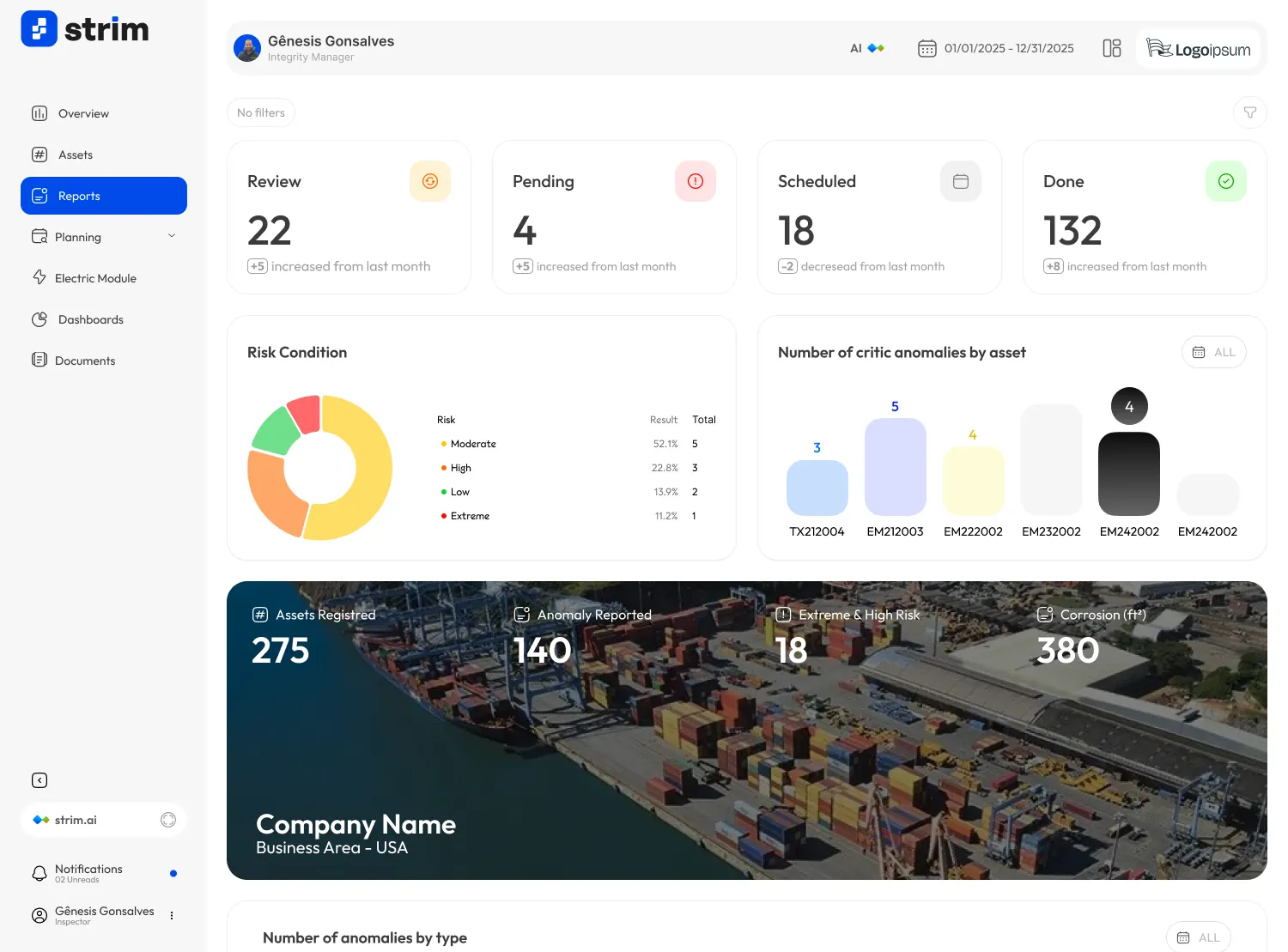
Although corrosion of offshore assets is inevitable, adopting an Asset Integrity Management System (AIMS) is essential to control and mitigate its effects. Innovative AIM tools, such as STRIM, offer integrated solutions for corrosion management, analyzing inspection data and providing a holistic view of asset condition, enabling rapid adjustments to maintenance strategies.
Data collected during inspections and maintenance — such as corrosion rate, type, extent, and location — is essential for ensuring the safety and longevity of assets. When integrated with maintenance techniques and risk management, AIM enables the early identification of corrosion signs and the implementation of corrective actions before asset integrity is compromised and catastrophic failures occur.
Conclusion
Adopting effective integrity management practices ensures operational continuity, promoting a safer and more reliable operating environment in compliance with strict health, safety, and environmental standards. An effective AIM system not only controls corrosion, but also optimizes costs and ensures asset integrity throughout its life cycle.